
Shock Dyno & Suspension Dynamometers for Professional Testing

Equip your workshop with LABA7 shock dynos. Our dynamometers deliver high-precision testing and user-friendly system design for accurate shock absorber and suspension assessment.
Stop tuning your suspension setups by feel. LABA7 Scotch-Yoke suspension dynos give you clean, repeatable data with modern software and analytical tools. Our range runs from the 0.14 m² servo-driven MICRO to the 15 HP SUPER HEAVY with a 20 kN load cell.
Scotch-Yoke Crank Shock Dynamometers
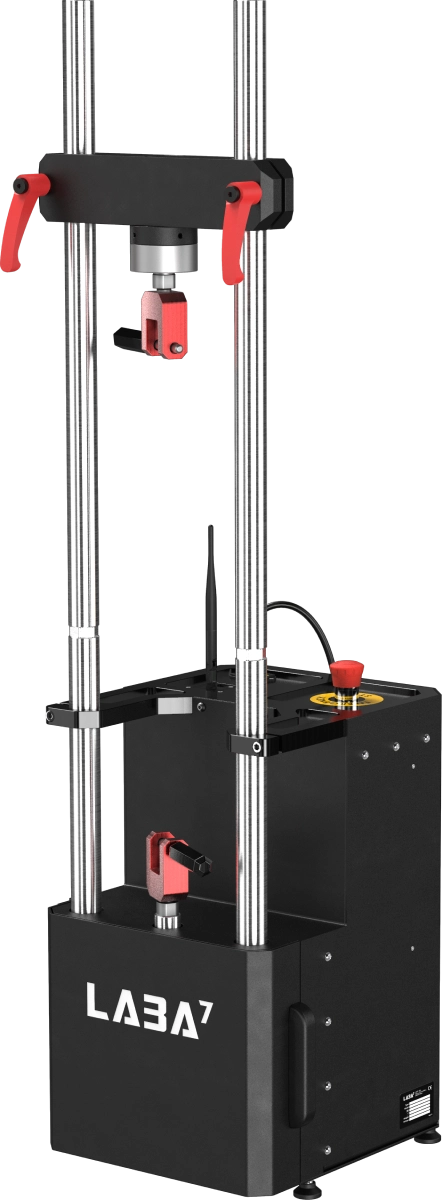
MICRO Shock Dyno
| Price (ex VAT) | 6,000 EUR (~6,999 USD) |
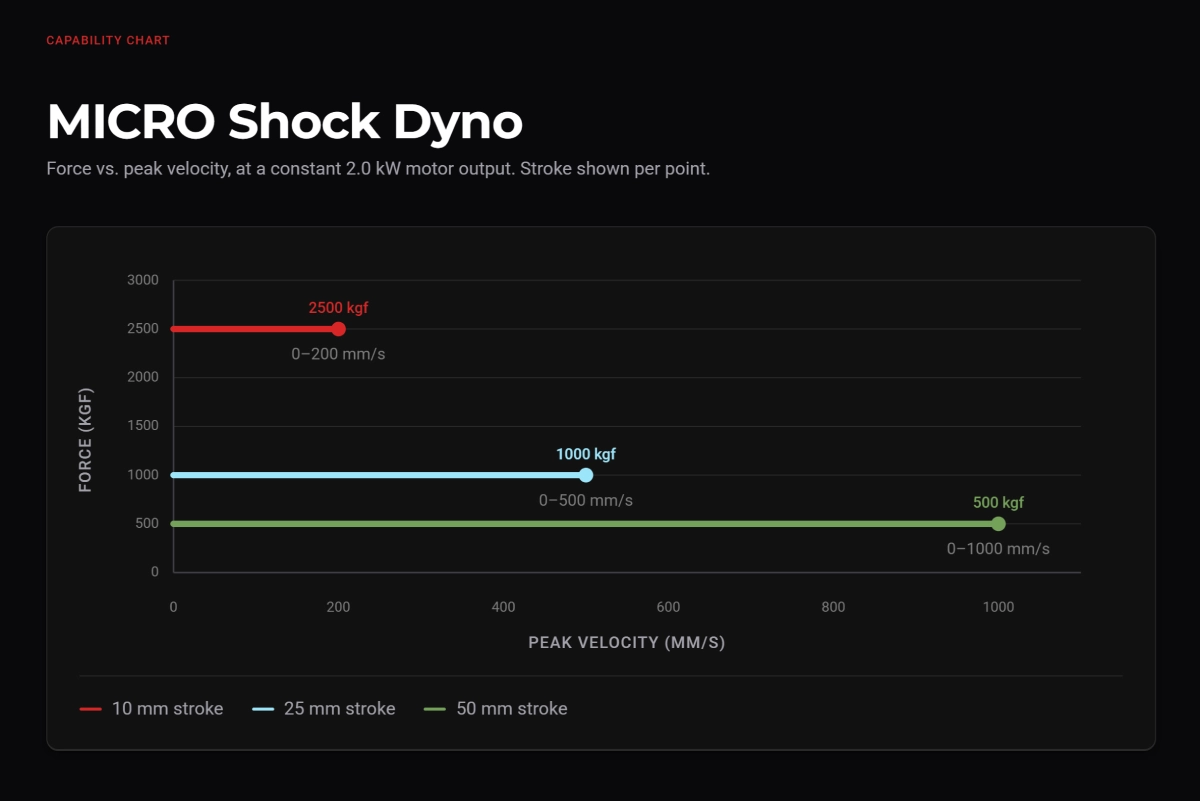
| Velocity | 1 – 1,000 mm/s |
| Load cell capacity | 10,000 N |
| Motor power | 2.7 HP |
| Stroke (mm) | 10-25-50 |
| Free mounting length | 0 – 700 mm |
| Power requirement | 1-phase |
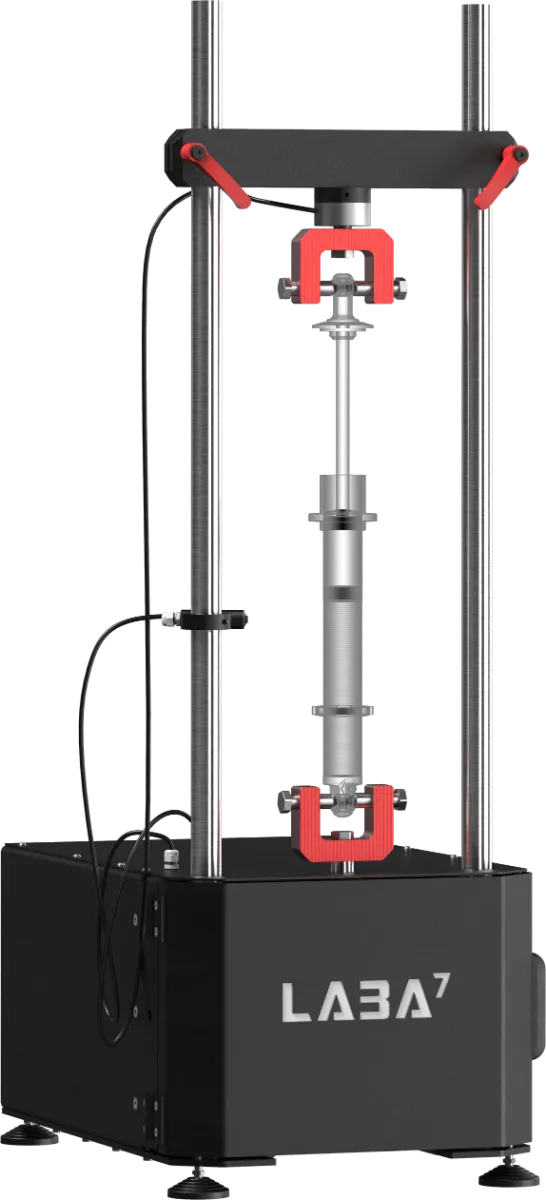
FEATHERLIGHT Shock Dyno
| Price (ex VAT) | 9,000 EUR (~10,500 USD) |
| Velocity | 5 – 1,900 mm/s |
| Load cell capacity | 10,000 N |
| Motor power | 3 HP |
| Stroke (mm) | 25-50-75-100 |
| Free mounting length | 0 – 850 mm |
| Power requirement | 1-phase |
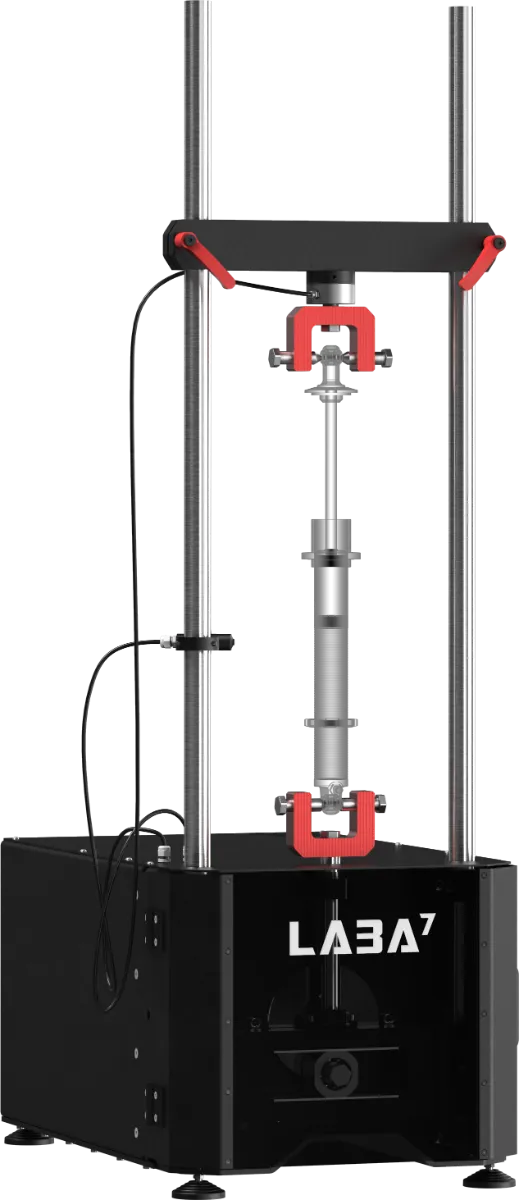
LIGHT Shock Dyno
| Price (ex VAT) | 11,500 EUR (~13,350 USD) |
| Velocity | 5 – 2,500 mm/s |
| Load cell capacity | 10,000 N |
| Motor power | 4 HP |
| Stroke (mm) | 25-50-75-100-120-150 |
| Free mounting length | 0 – 955 mm |
| Power requirement | 1-phase |
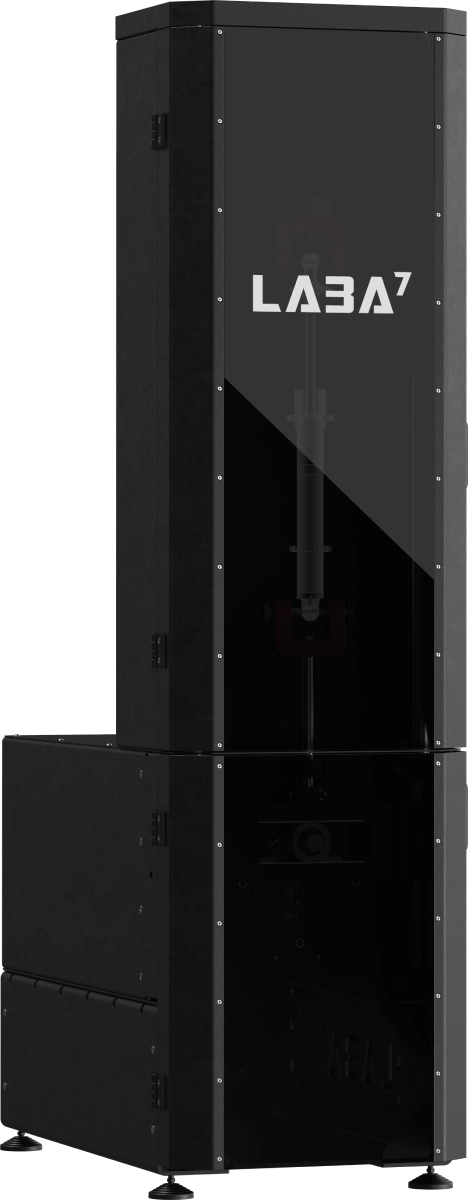
MID Shock Dyno
| Price (ex VAT) | 15,500 EUR (~17,999 USD) |
| Velocity | 5 – 2,500 mm/s |
| Load cell capacity | 15,000 N |
| Motor power | 5.5 HP |
| Stroke (mm) | 25-50-75-100-120-150 |
| Free mounting length | 0 – 955 mm |
| Power requirement | 3-phase |
HEAVY Shock Dyno
| Price (ex VAT) | 19,500 EUR (~22,650 USD) |
| Velocity | 8 – 3,000 mm/s |
| Load cell capacity | 15,000 N |
| Motor power | 10 HP |
| Stroke (mm) | 25-50-75-100-120-150 |
| Free mounting length | 0 – 955 mm |
| Power requirement | 3-phase |
SUPER HEAVY Shock Dyno
| Price (ex VAT) | 28,000 EUR (~32,550 USD) |
| Velocity | 8 – 3,000 mm/s |
| Load cell capacity | 20,000 N |
| Motor power | 15 HP |
| Stroke (mm) | 25-50-75-100-120-150 |
| Free mounting length | 0 – 955 mm |
| Power requirement | 3-phase |
🌏 International & US Freight Shipping Available 🌏
We ship to workshops, race teams, OEMs and test laboratories in the United States and worldwide, except sanctioned countries. Ask us for a shipping estimate!
MICRO: A Compact, Affordable Shock Dyno Without the Compromises
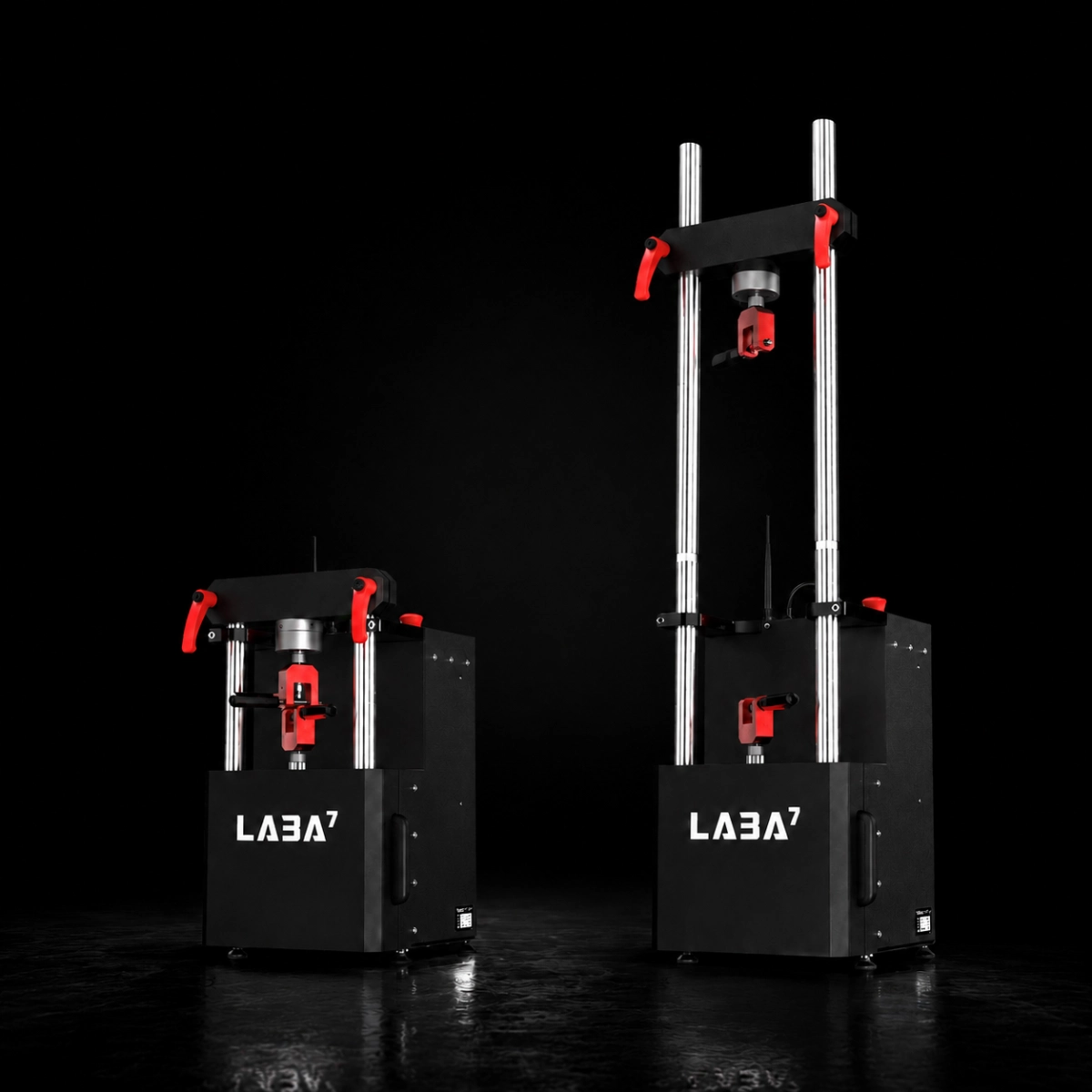
Full Shock Dyno Capability
MICRO measures everything the larger machines measure: PVP, force-velocity, hysteresis, cavitation, gas pressure and seal drag. It uses the same 10,000 N load cell as FEATHERLIGHT and LIGHT, the same contactless temperature sensor, and the same Shock Dyno Software.
More Low-Speed Data
The closed-loop servo motor extends the testing range at the low end. MICRO tests down to 1 mm/s and maintains the target velocity throughout the stroke. This is where seal friction, gas force and bleed behaviour begin to separate, but it is also the most difficult region to measure cleanly. What MICRO adds is the ability to hold precise test points at velocities the other machines cannot reach.
Compact Footprint
Because of its compact size, MICRO can travel with the team and operate in the paddock instead of waiting for shock absorbers to return to the workshop. A complete testing cycle takes less than two minutes, allowing changes to be verified between sessions rather than after the event. The MICRO Shock Dyno turns decisions you would normally postpone into decisions you can settle on the spot.
Why LABA7 Shock Dynos?

Built on Feedback
At LABA7, the relationship doesn’t end at delivery. Customer feedback goes directly into development – new features, refined processes, better data analytics. Once tested and validated, updates roll out to every machine. This is how our dynos keep getting better long after delivery.
No upsell. No new model required.
See how our shock dynos can make your work even easier? Reach out to your LABA7 representative or contact our technical support team. Your input shapes the next update.
That’s how LABA7 machines keep getting better: one real-world insight at a time.
Shock Dyno Software
We own every step of our software development. This approach allows us to create and ship new solutions, features, and bug fixes rapidly. And implement custom requests from customers, of course. Relying on third-party software would make custom feature development slow or impossible.
Our Shock Dyno Software collects data from the data logger, cleans it from noise, and presents it in easy-to-understand graphs.
Our intuitive interface is designed to let mechanics configure, run, and analyze a complete test cycle in under two minutes.
Built for Real Workshops
We developed LABA7 shock dynos for real-world mechanics and engineers. While focusing on accuracy, we did not forget the daily user. We optimized our suspension dynos to run tests quickly, onboard new employees easily, and test dampers reliably every day.
The testing process is simple and intuitive, streamlined to deliver results without unnecessary complexity. Whether you are an experienced technician or new to dyno testing, the LABA7 shock dynos helps reduce the learning curve and improve workflow.
That is what makes our suspension test systems perfect choice for productivity and performance.
Not sure which model fits your needs?
The Hardware: Why Our Data is Cleaner
The dyno strokes the damper in a sine wave at the velocities you select, so each test point runs at a known, repeatable speed. This is how you diagnose blocked oil passages, worn components, or cavitation from low gas pressure.
At the heart of this process are two critical hardware components: the load cell and the data logger.
Load cells act as transducers, converting the physical forces exerted on the suspension system into electrical signals. They accurately measure compression and rebound forces under varying conditions, detect irregular force patterns, and enable a precise analysis of shock absorber behavior, all feeding into data-driven adjustments and improvements.

The data logger then captures these signals in real time, recording parameters such as force, displacement, velocity, and temperature, ensuring that no measurement is lost during the test cycle.
We developed and build our data logger in-house, because we simply could not compromise on this component. It samples information thousands of times per second close to the raw signal.

All test data is displayed in clear, real-time graphs including force versus velocity and force versus displacement, making it easy to analyze shock behavior during compression and rebound phases. With this insight, you can make informed adjustments to improve suspension performance, safety, and ride quality.
LABA7 suspension dynamometer delivers this advanced testing capability through intuitive software and precise hardware, empowering mechanics and racers to tune shocks confidently and accurately.
Our software plots force vs velocity and force vs displacement in real time, so you see how the damper behaves in compression and rebound while the test runs. A single force-vs-velocity curve can hide some of that behaviour; see what a PVP graph hides.

Benefits of Owning a Shock Dyno
Spot Cavitation, Seal Drag, and Hysteresis Instantly
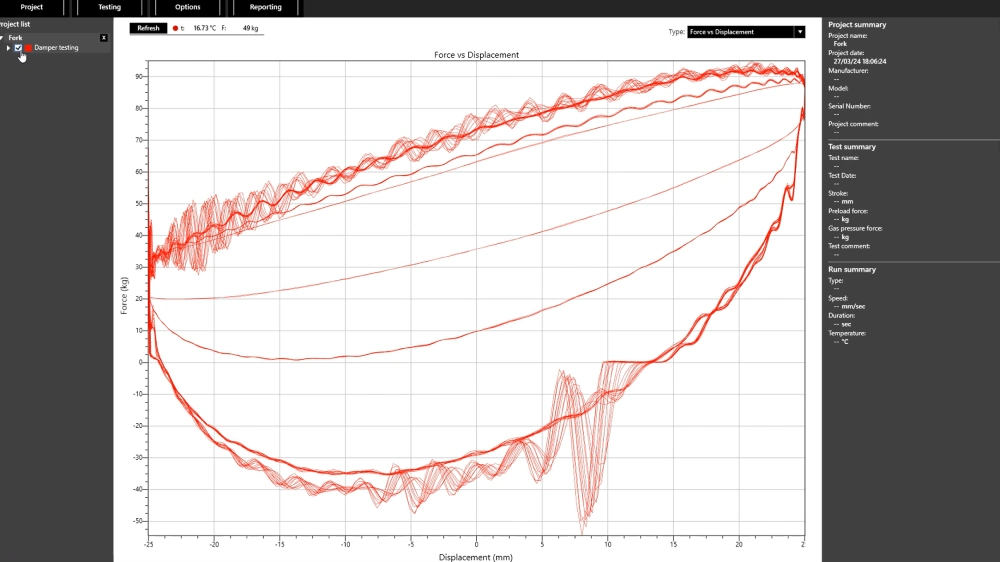
A suspension dynamometer can quickly identify and diagnose common issues with shock absorbers or forks within seconds. By examining the force vs displacement graph, you can easily understand what is happening with the damper during compression and rebound. Problems such as blocked oil passages, broken shims, cavitation caused by low gas pressure, and more can all be rapidly detected through detailed dyno graph analysis.
Track the Impact of Every Click and Shim Change
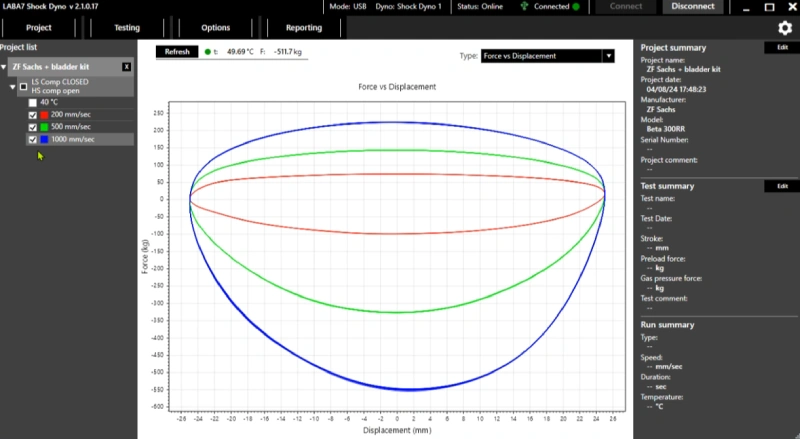
The software overlays test runs in one graph, so you can compare left against right, front against rear, or one damper before and after a service or shim change. The example below overlays three velocities on the same shock. Each overlay gives you a graph to show the customer what changed. See the full workflow in Shock Dyno Software.
Here’s an example. Force vs displacement for a ZF Sachs rear shock with a bladder kit (low-speed compression closed, high-speed compression open, 40 °C). At 200, 500 and 1,000 mm/s, peak compression force rises from about 980 to 5,350 N and peak rebound from about 690 to 2,160 N.
Translate Rider Feedback into Hard Data
Successful suspension tuning requires accurate data and a thorough understanding of shock absorber behavior. By analyzing graph curves alongside rider feedback, you can make data-driven, precise adjustments to fine-tune suspension performance according to the rider’s needs. The shock dynamometer excels here by providing clear visual feedback on how your adjustments affect damper behavior and translate to improved track or road performance.
Eliminate Comebacks and Warranty Disputes
Performing quality control testing on the dyno before returning products to customers is a vital step in guaranteeing customer satisfaction. By thoroughly testing the damper, you can verify your work and eliminate potential errors, reducing the risk of dissatisfied customers. Additionally, this testing provides solid evidence that all work was performed correctly, which can be invaluable in warranty claim situations related to customer damage.
Expand Your Possibilities with Shock Dyno Adapters
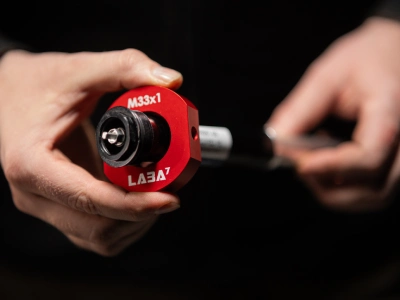
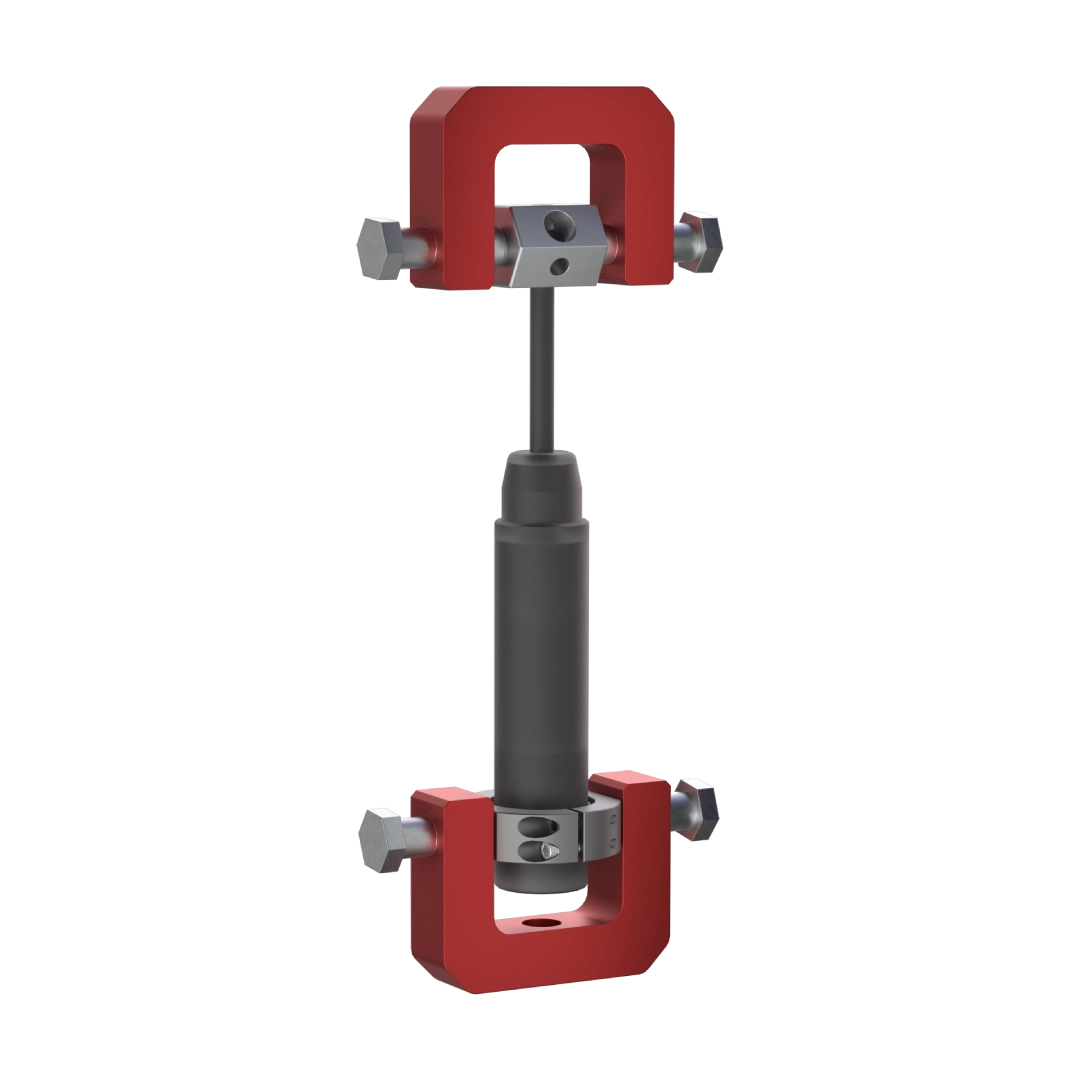
LABA7 shock dyno adapters provide a seamless connection, providing the most accurate and insightful testing of your shock absorbers. This results in enhanced suspension performance, improved testing efficiency, and a deeper understanding of your suspension system’s capabilities.



LABA7 Shock Dyno Specifications
LABA7 Scotch-Yoke crank shock dynos are engineered for accurate, repeatable suspension and damper testing. The scotch-yoke mechanism ensures consistent sinusoidal motion, making these shock dynamometers ideal for performance tuning, R&D, and quality control applications.
Not sure which figures matter for your dampers? See what to compare when buying a shock dyno, or ask us.
*Smaller load cells are available upon request.
🌏 International & US Freight Shipping Available 🌏
We ship to workshops, race teams, OEMs and test laboratories in the United States and worldwide, except sanctioned countries. Ask us for a shipping estimate!
Want More Control and Precision?
If you’re ready to take shock testing further, the EMA Damper Test System (electromagnetic) delivers superior precision, control, and better performance. Using an electromagnetic linear actuator, it simulates real-world conditions with programmable motion profiles, including non-sinusoidal waveforms that a Scotch-Yoke dyno can’t replicate.
The EMA Damper Test System Dyno also covers a wider speed and displacement range and typically requires less maintenance thanks to fewer mechanical wear points. Choose EMA when the test needs non-sinusoidal waveforms, recorded track data or velocities above 3,000 mm/s.

Frequently Asked Questions About Shock Dyno
What is a shock dyno and why do I need one?
A shock dyno (dynamometer) measures the performance characteristics of suspension dampers (shocks). It helps you analyze compression and rebound forces, identify inconsistencies, and optimize suspension setups for racing or performance applications.
For a worked example, see fine-tuning suspension with shim adjustments.
Is the dyno software included and what does it do?
Yes, the dyno includes intuitive software that records, graphs, and analyzes force vs. velocity and displacement data. It allows you to compare multiple runs, export results, and fine-tune your suspension setup. Our guide on how to read dyno graphs explains what each curve shows.
What types of shocks can this dyno test?
Our shock dyno is compatible with a wide range of shocks, including mono-tube, twin-tube, coilover, motorcycle, off-road, and racing dampers. Specific adapter kits may be required for certain models.
How accurate are the results?
Force is measured by a load cell rated to 10,000 N (MICRO, Featherlight, Light), 15,000 N (MID, Heavy) or 20,000 N (Super Heavy). Load cell rating: non-linearity 0.05% of full scale, hysteresis 0.05%, repeatability 0.03%; on the 10,000 N load cell, 0.05% is ±5 N. Smaller load cells are available on request for low-force dampers. Before each test, the dyno measures the installed damper’s stroke, rod force, gas force and temperature. The load cell can be tared with the dyno empty. A contactless sensor logs damper temperature, so runs can be compared at the same temperature. What to check in any rig’s accuracy figures: how to read a damper test rig spec sheet.
What are the setup and maintenance requirements?
The dyno arrives with a detailed setup guide. MICRO, FEATHERLIGHT and LIGHT run on 1-phase power (110 V 60 Hz or 230 V 50 Hz). MID, HEAVY and SUPER HEAVY need 3-phase power (220 V 60 Hz or 380 V 50 Hz).
All models need a stable surface.
The test procedure is shown in how to use a suspension dyno.
What is the most affordable LABA7 shock dyno?
The MICRO Shock Dyno, at €6,000 ex VAT. It runs the same 10,000 N load cell, contactless temperature sensor and Shock Dyno Software v2 as the larger machines, in a 0.14 m² footprint. Its limits are stroke and size: 50 mm maximum stroke and 700 mm free mounting length, which suits car and kart dampers. For MTB forks and shocks, choose the Featherlight (€9,000). For motorcycle forks and shocks, choose the Light (€11,500) or larger.
More LABA7 products:
Spring rate testers
Vacuum bleed pumps

Race car scales

Suspension tools

Spring rate testers
Race car scales
Vacuum bleed pumps
Suspension tools