
EMA Dyno – Electromagnetic
Shock Absorber Testing System
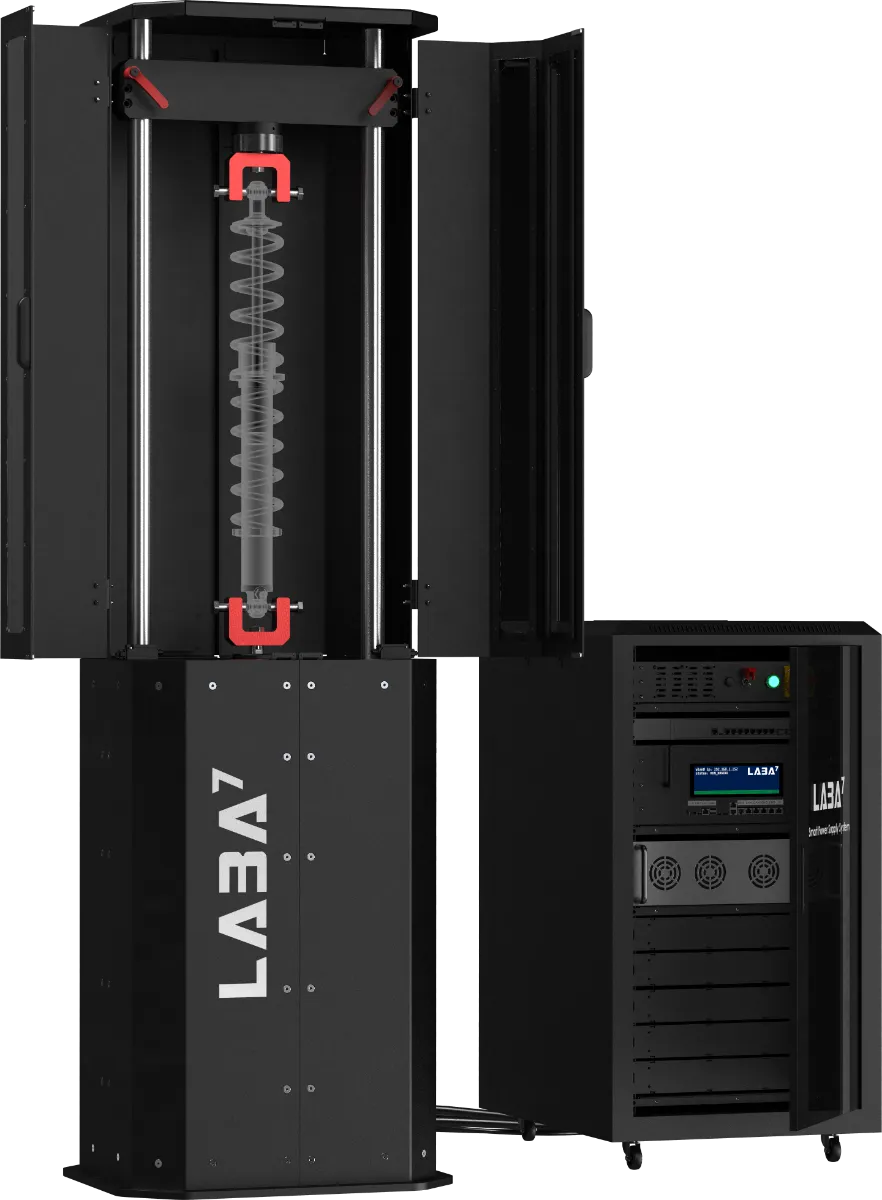
The LABA7 Electromagnetic (Electrodynamic) Damper Test System utilizes linear motors to deliver variable strokes, high-frequency testing, and exact track data playback. Engineered for advanced R&D, it captures dynamic forces that traditional mechanical testers cannot reproduce.
EMA comes with a 1-year manufacturer warranty, plus a 5-year limited warranty from commissioning on the power supply unit (supercapacitor bus).
While a traditional Scotch-Yoke shock dyno is perfect for standard workshop testing, our Electromagnetic Damper Test System is engineered for high-level R&D, offering variable strokes and complex frequency testing.
One Shock Absorber Testing Machine. Three Power Levels.
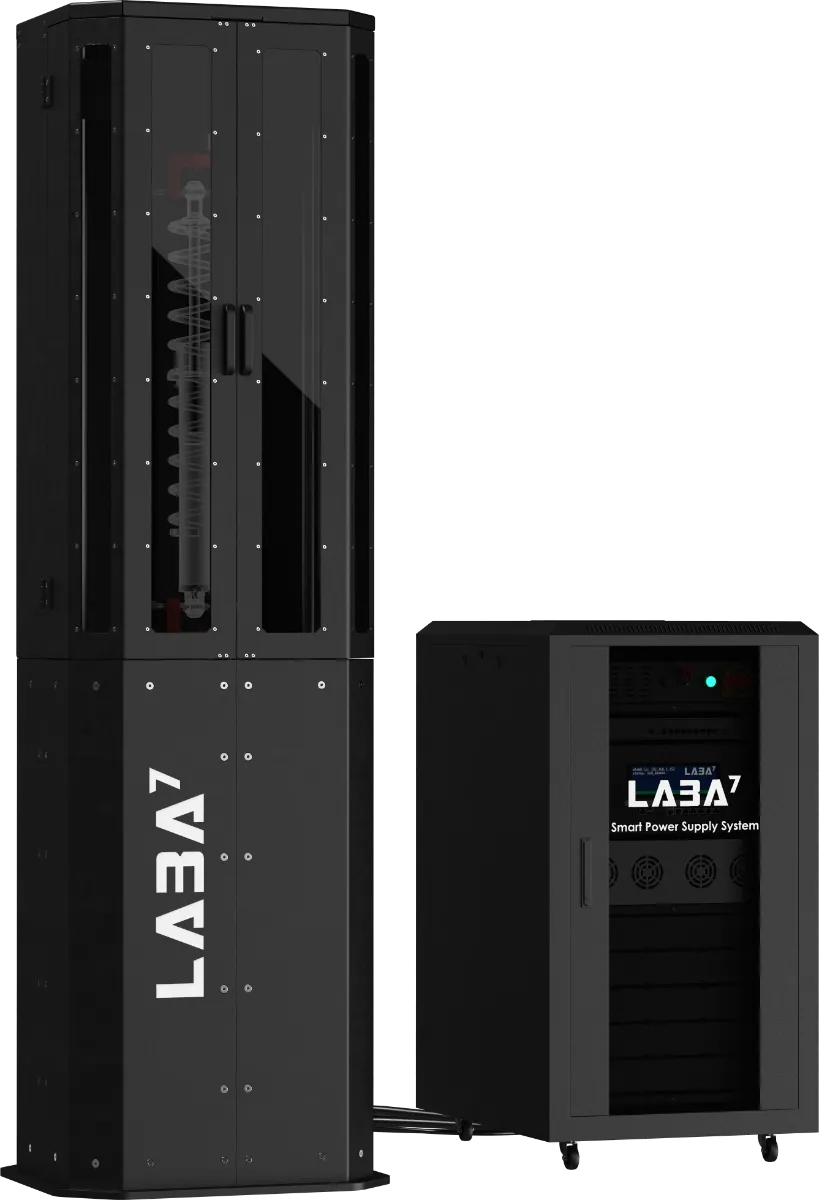
30 kW EMA
| Price (ex VAT) | 65,000 EUR (~74,500 USD) |
| Velocity | 0.1 – 7,000 mm/s |
| Peak force @ 2 m/s | 10 kN |
| Motor power | 30 kW |
| Stroke (mm) | 250 mm |
| CDC/CCD | Optional |
| Additional ADC channels | Optional |
| Power requirement | 3-phase standard. Other options available. |
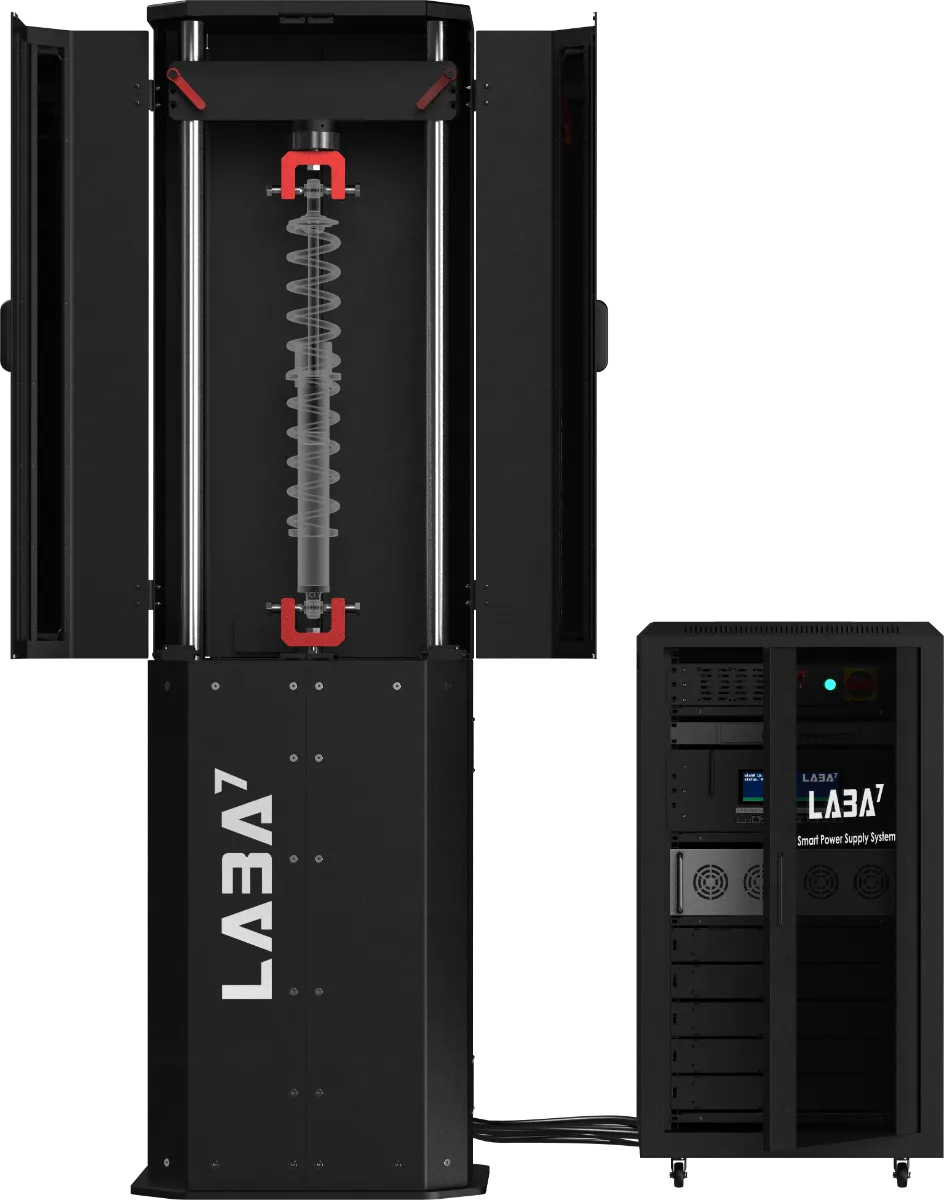
60 kW EMA
| Price (ex VAT) | 87,000 EUR (~101,000 USD) |
| Velocity | 0.1 – 7,000 mm/s |
| Peak force @ 2 m/s | 20 kN |
| Motor power | 60 kW |
| Stroke (mm) | 250 mm |
| CDC/CCD | Optional |
| Additional ADC channels | Optional |
| Power requirement | 3-phase standard. Other options available. |
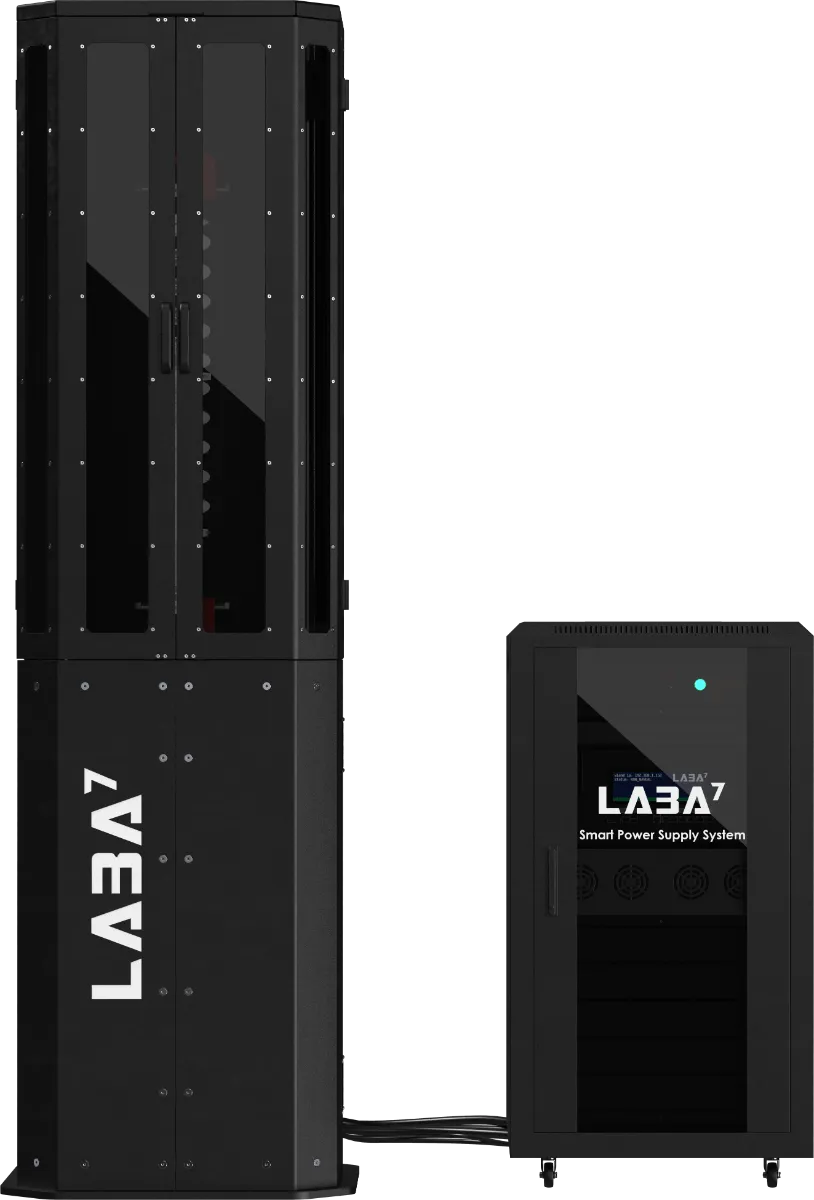
120 kW EMA
| Price (ex VAT) | 176,000 EUR (~204,000 USD) |
| Velocity | 0.1 – 7,000 mm/s |
| Peak force @ 2 m/s | 40 kN |
| Motor power | 120 kW |
| Stroke (mm) | 250 mm |
| CDC/CCD | Optional |
| Additional ADC channels | Optional |
| Power requirement | 3-phase standard. Other options available. |
🌏 International & US Freight Shipping Available 🌏
We routinely ship heavy testing equipment directly to workshops and race teams across the United States and the rest of the world, except to sanctioned countries. Ask us for a shipping estimate!
Features of Our EMAs
Sampling Rate and Accuracy
Digital position sensor that samples data at a frequency of 20 kHz with a position resolution of 50 nm. To ensure there is no phase shift in the data, we simultaneously read force measurements at the same 20 kHz speed using an analog sensor.
Noise Levels
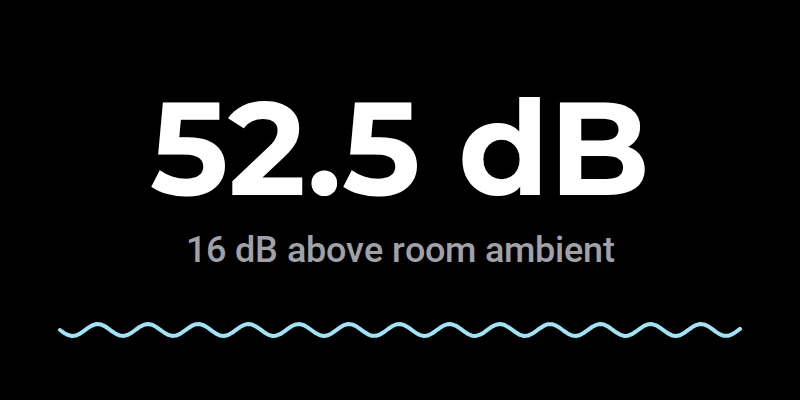
A full damper test runs at 52.5 dB – only 16 dB above the ambient noise of the room it was measured in. The test of 1 Hz at 100 mm stroke was measured with a Sauter SU130 at 1 m distance and 1.6 m height on a standard EMA.
Side Load
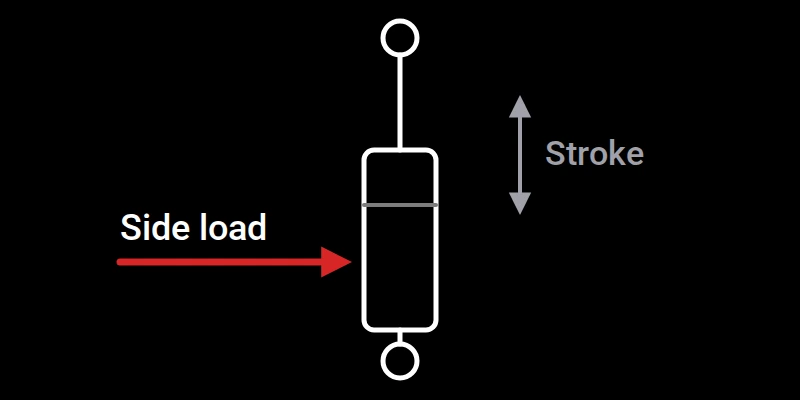
The EMA is available with a side load unit that applies a lateral force to the damper during a test. In strut-type suspensions the damper carries lateral load from the suspension geometry, which adds friction at the rod guide and piston. A test without side load measures the damper without that friction. With side load, force and friction results are closer to on-car conditions. One test sequence can include runs with and without side load, so you can measure its effect on the same damper in the same session.
Custom Applications
In-house developed components allow us to have full control of compatibility and upgradability. Not to mention it opens opportunities to innovate and create 100% custom features.
Optional Add-ons for EMA
Semi-Active Damper Control (CDC/CCD)
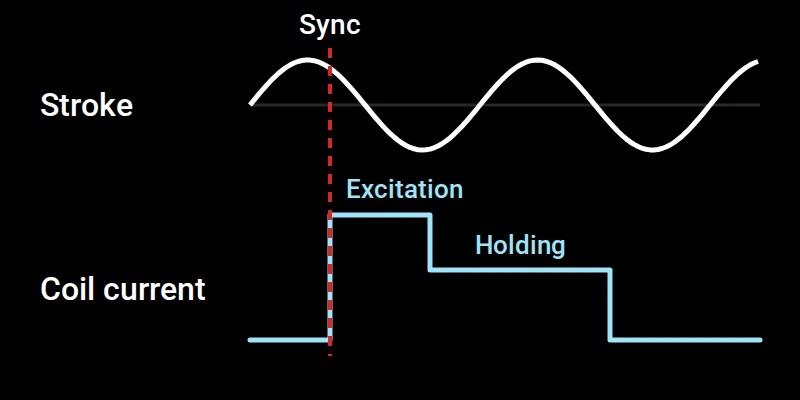
Controls the coil current of semi-active dampers, known as CDC (Continuous Damping Control) or CCD (Continuously Controlled Damping), from the same test profile as the EMA motion. Current and excitation stay synchronized with stroke and velocity. Two independent outputs, 12-24 V, 0-5 A PWM current control. Excitation current for a set time, then a holding current. Coil current and voltage are recorded as data channels. A sync line lets an external control system trigger the test or be triggered by it, so a vehicle controller signal can be replayed alongside the motion profile.
Tell us about your damper and we will confirm the configuration.
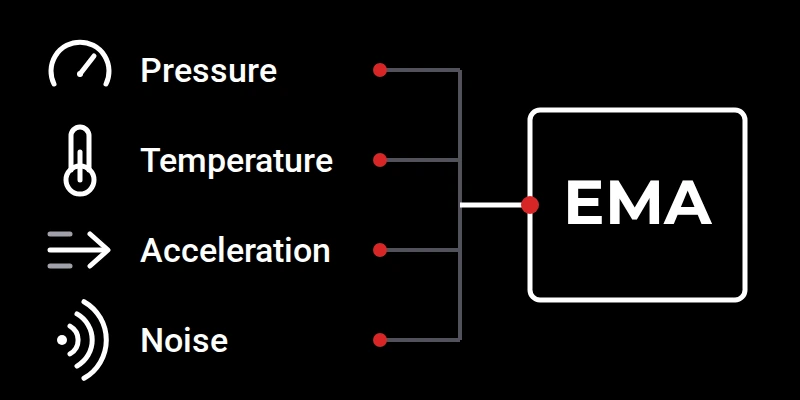
Data Acquisition System DAQ
The external Ethernet Data Acquisinion System DAQ lets you measure more than force and displacement. Connect pressure, temperature, acceleration, noise or extra displacement sensors, and see them on the same time base as the EMA’s force and displacement curves in the LABA7 software. Add more units to add more channels. €5,000 ex VAT for the EMA version.
Tell us which sensors you need to connect.
Components Developed In-House
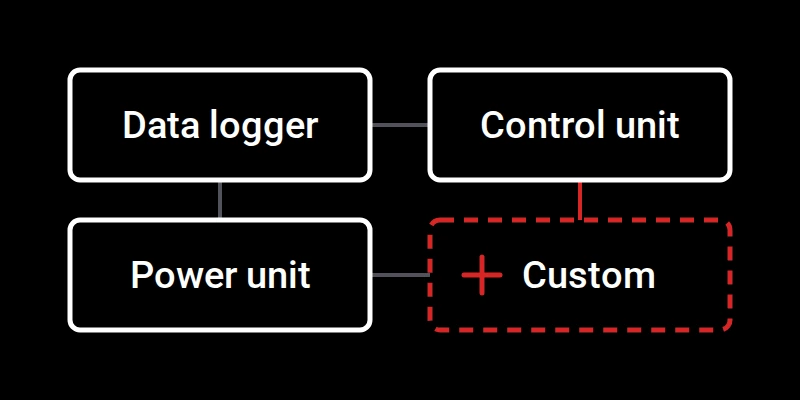
Data Logger
Our engineers developed the data logger and controller for EMA in-house. They had the one objective – create a board that detects even the tiniest force changes in damper performance.
It delivers a position resolution of 50 nanometers and a sampling rate of 20 kHz. The load cell resolution and sampling rate are 20-bit and 20 kHz.
Control Unit
The control unit of EMA is integrated with a data logger into a single board. This solution allows us to provide the accurate test results in real time.
Incorporating state-of-the-art technologies such as silicon carbide (SiC) MOSFETs allowed us to generate significantly more power.
Additionally, this unit controls the operation of the smart power supply, enhancing the efficiency of EMA by LABA7 while reducing energy consumption.
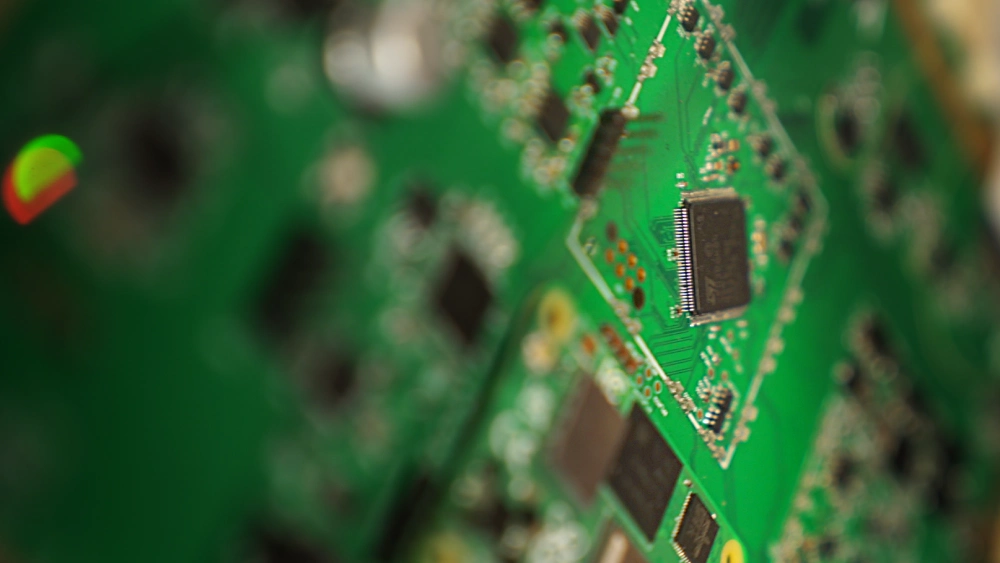
Power Unit
The power supply unit charges supercapacitor packs from the 16 A supply and delivers up to 700 V to the actuators. So, the machine does not depend on a high-voltage, high-amperage mains input. The stored energy also allows you to finish the test safely if mains power drops out during a run.
30, 60 and 120 kW systems all run from the same standard supply: 3-phase 380/400 VAC, 16 A. Our electrodynamic damper test machines can be optimized for 1-phase 220/240 VAC on request. Other configurations, including 110/120 VAC for the USA, are also available.
Warranty: the power supply unit (supercapacitor bus) carries a 5-year warranty, covering all LABA7 EMAs manufactured under manufacturer-specified operating conditions.
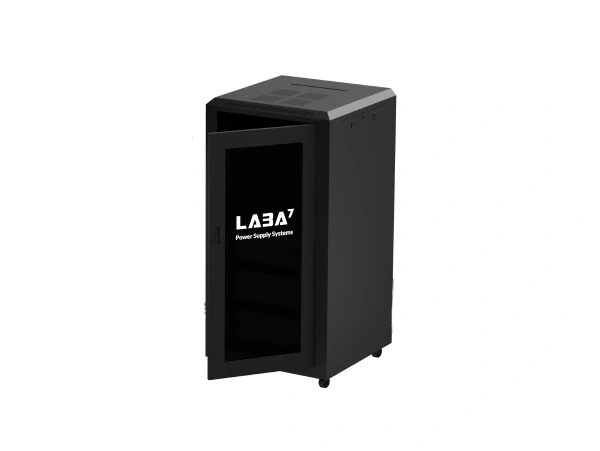
Software
LABA7’s software for electromagnetic damper test systems is designed with user experience in mind. Operators can easily find, manage, and customize the features of the tests, minimizing the onboarding time.
Our software for EMA allows pre- and post-test editing of data. To save time, it enables operators to trim track data and test damper performance in specific stages of the course. After the test, operators can slide and cut graphs as well as push individual cycles on top of each other for better data analysis.
The software enables seamless integration with additional sensors and testing equipment.
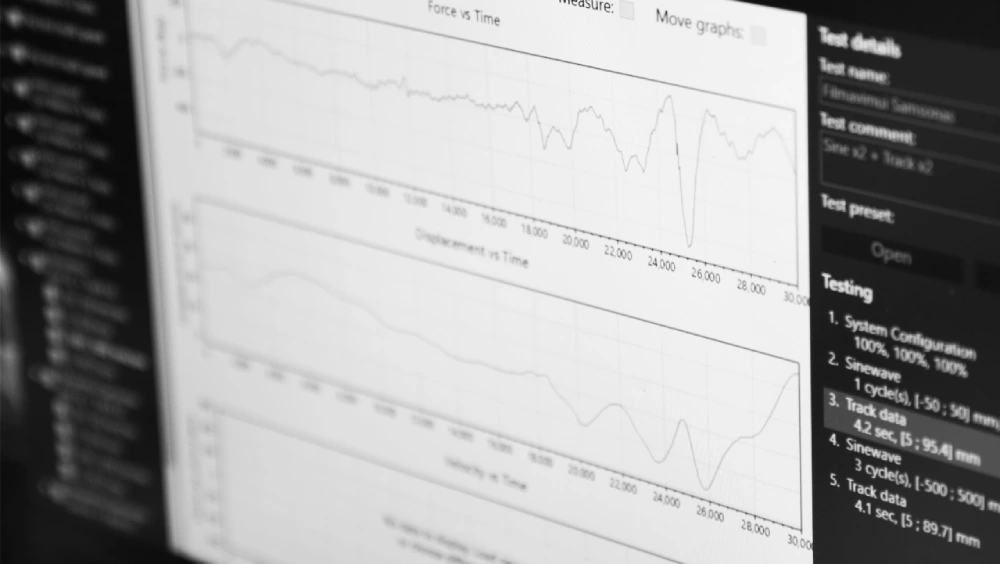
Track Data Replay
The EMA replays recorded damper displacement from a vehicle telemetry log as the test input. Load the CSV, select the format that matches your logger, and set units.
The software shows the displacement curve with the file’s sampling rate, duration, minimum and maximum position, and maximum speed.
Optionally filter the data, trim it to the section under test, set the minimum damper position, and apply a displacement multiplier.
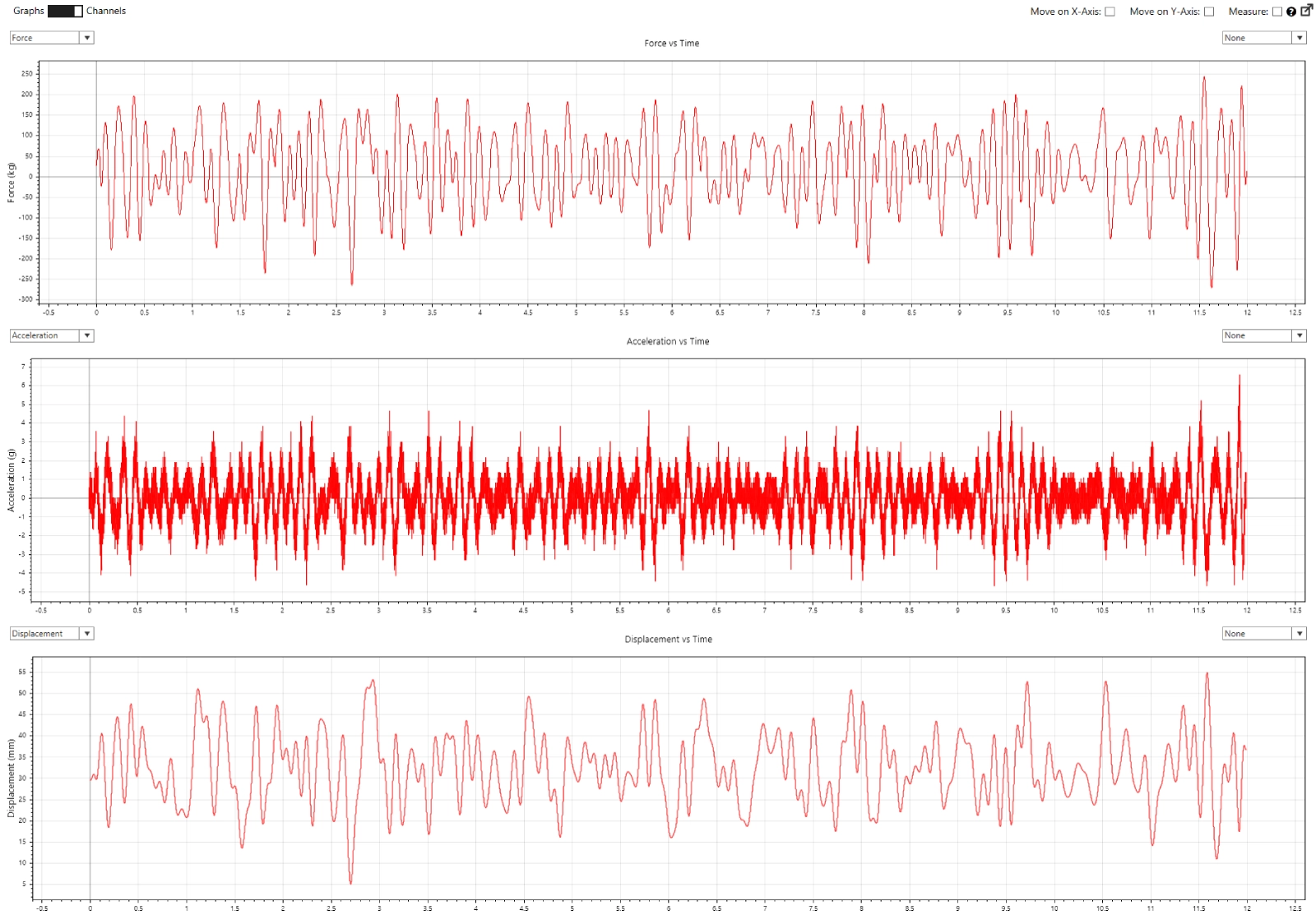
Full List of EMA Specifications
30 kW
60 kW
120 kW
* Depends on the damper. Depends on the stroke.
🌏 International & US Freight Shipping Available 🌏
We routinely ship heavy testing equipment directly to workshops and race teams across the United States and the rest of the world, except to sanctioned countries. Ask us for a shipping estimate!
Test Types and Waveforms
Advantages of LABA7 Damper Testing Machines

Repeatable Results
The damper piston is driven directly by frictionless linear motors, with few mechanical components to wear. Position is measured at 50 nm resolution and force at 20-bit resolution, both sampled at 20 kHz. The software overlays cycles and runs on one graph, so repeat runs on the same damper can be compared directly.
Low Maintenance
Damper test system EMA requires minimal maintenance as it has only a few mechanical components. Such architecture allows to increase reliability and operational efficiency.
Efficiency
EMA employs a smart power supply system enabling it to conduct damper tests at 7,000 mm/s velocity, all while maintaining a modest power consumption rate.

Performance
Damper test system EMA combines high force, immediate acceleration, and velocity with a data logger that provides data precision and depth.

Future-Proofing
Software and firmware of LABA7 EMAs can be upgraded and updated. Most of the time 100% remotely.
Versatility
Sine, sine-on-sine, constant velocity, constant acceleration, sawtooth, inverted sawtooth, impulse, free fall, pink noise, linear and exponential sweep and chirp, custom client waveform, and direct track data import. See Test Types and Waveforms.
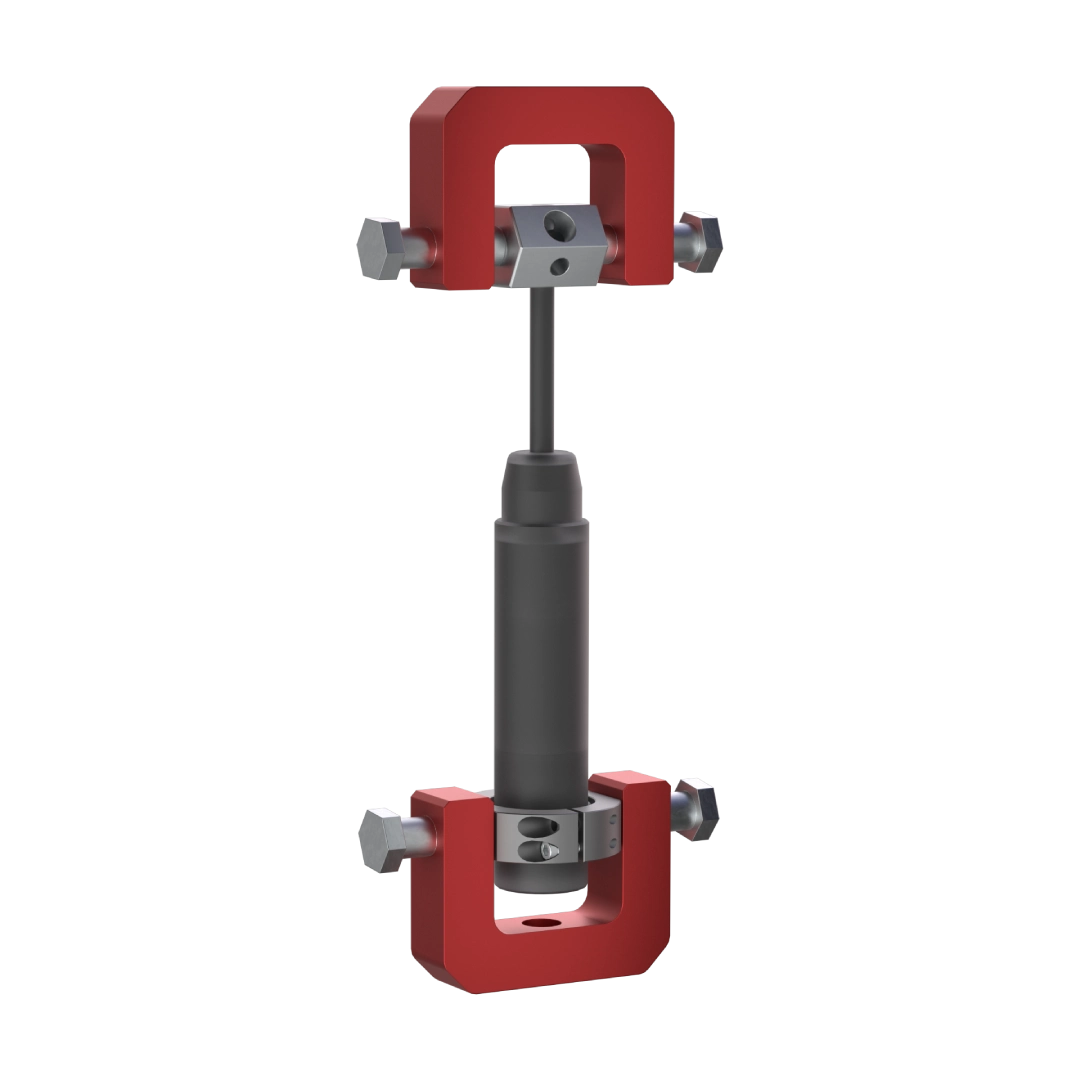
Expand Your Possibilities With Adapters and Fixtures
LABA7 adapters create a seamless link, allowing for the most accurate and insightful tests of your shock absorbers. The result – performance, efficiency, and a deeper understanding of your equipment’s capabilities.



Installation, Training and Support
Every EMA is installed, commissioned and configured in cooperation with LABA7. In the US and overseas this is done remotely. Installation verification, a first test run and operator training are completed before independent operation.
The customer unloads, anchors and connects it to the power grid. The machine is anchored to the floor with bolts. The anchor pad and safety enclosure are standard.
Standard package: EMA unit, smart power supply, lifting adapters, mains cable (EU or USA plug), 5 m LAN cable, USB-to-LAN adapter, scratch protection pads, two U-clamp adapters, user manual, software (free of charge), and email & WhatsApp support.
Updates: software and firmware updates, remote.
Warranty: 1 year on the machine. 5 years on the power supply unit (supercapacitor bus).
Calibration: in-house calibration is standard. Third-party calibration is available upon request.
Training format: 1-on-1 training, online.
US and overseas installation: remote.

5-Year Limited Warranty on the Power Supply Unit

1-year manufacturer warranty, plus a 5-year limited warranty from commissioning on the power supply unit (supercapacitor bus).
Only units used in manufacturer-specified, normal operating conditions that experience a functional failure or degrade to a point where the EMA system can no longer execute its published testing specifications fall under the warranty. The power supply unit (supercapacitor bus) that falls under these conditions will be repaired or replaced free of charge.
Frequently Asked Questions
Can the EMA replay recorded track data?
Yes. It imports a telemetry CSV, filters and trims it, and replays it within 250 mm stroke and 7 m/s.
Can the EMA test semi-active CDC and CCD dampers?
Yes, with the optional CDC/CCD damper control module.
It controls damper coil current from the same test profile as the EMA motion, with 2 independent outputs, 12-24 V and 0-5 A PWM current control. Its sync line lets an external control system trigger or follow the test.
Can the EMA record additional sensors?
Yes, with the optional LABA7 DAQ add-on: 8 single-ended or 4 differential 16-bit channels (125 kS/s aggregate), synchronized with the test, so pressure, temperature, acceleration and other signals are recorded alongside force and position.
What should an OEM lab compare when buying a damper test machine?
Peak force, velocity, stroke and frequency range. Sampling rate and resolution. Track data import and waveform coverage. Side load option. Installation, training and support. Data export. Warranty.
Ask each vendor for commanded vs measured motion error at your test conditions.
How does an electromagnetic damper test system differ from a hydraulic one?
Electromagnetic and hydraulic damper test systems are two distinct technologies used to evaluate and test dampers in various applications.
Electromagnetic actuators provide high precision in force control with quick response times. They excel in handling a wide range of frequencies and operate quietly, thanks to fewer moving parts and the absence of fluid dynamics. Additionally, these systems require less maintenance and experience minimal downtime, making them highly efficient.
On the other hand, hydraulic damper testing systems are designed to generate the higher forces needed for testing large or industrial dampers. Especially in lower-frequency testing. However, hydraulic systems demand regular maintenance due to potential leaks, fluid replacement needs, and the wear and tear of mechanical components. Moreover, they have more stringent health and safety requirements for operators compared to electromagnetic test systems.
Does the EMA test with side load?
Yes, with the optional side load unit. It applies a lateral force to the damper during a test. Lateral load on a strut-type damper adds friction at the rod guide and piston, and a test sequence can include runs with and without side load to measure the difference. The unit is available on EMAs ordered with the side load option.
Who installs it and trains operators?
LABA7 or an authorized representative, before independent operation.
What are the warranty terms?
1-year manufacturer warranty on the machine. 5-year limited warranty on the power supply unit (supercapacitor bus).
What data can I export?
CSV export of intervals, peak velocity plots and average velocity graphs. The software imports CSV, older LABA7 files and some files from other manufacturers.
What power does the EMA need?
Standard requirement is 3-phase 380/400 VAC, 16 A on all models. It can be optimized for 1-phase 220/240 VAC or the 110/120 VAC US grid on request. Tell us your site’s supply and we will confirm the configuration.
Is the EMA available in the USA?
Yes. LABA7 ships EMAs to workshops, race teams and labs in the United States and worldwide, except to sanctioned countries. A 60 kW EMA runs on 110 VAC in the USA. Prices are in EUR with USD equivalents, specifications are in metric and imperial units, the mains cable comes with a USA plug, and installation and training are done remotely. Tell us your site’s power supply and we will confirm the configuration.
More LABA7 products:
Spring rate testers
Vacuum bleed pumps

Race car scales

Suspension tools

Spring rate testers
Race car scales
Vacuum bleed pumps
Suspension tools