
When servicing suspensions, data-driven decisions in Vehicle Suspension Repairs make the difference between amateurish and professional results. Engineering must dictate the workflow, regardless of the application: motorcycle, MTB, off-roader, racecar, helicopter, or a train.
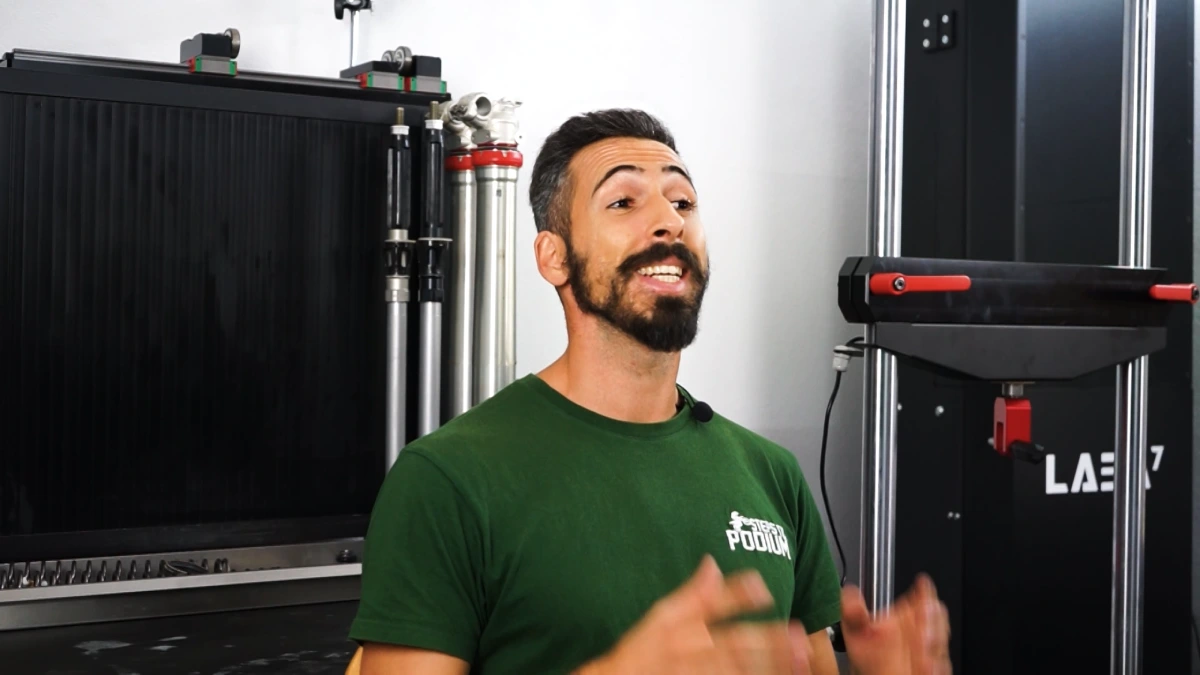
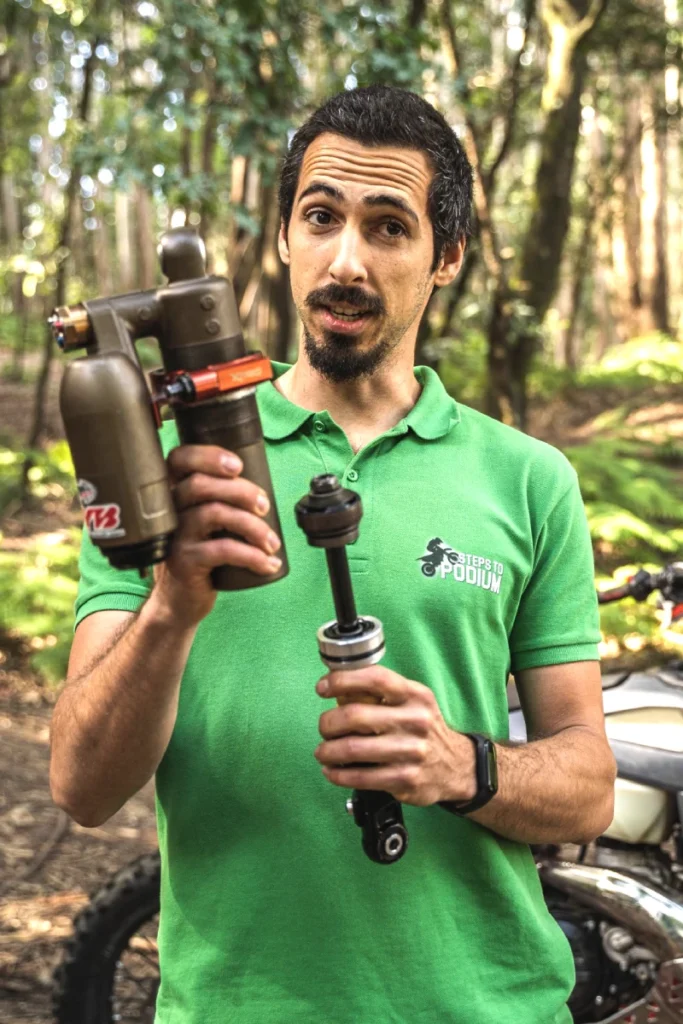
To scale his business, Luis Peixoto, the engineer behind Steps to Podium and a YouTuber, moved from manual diagnostics to measuring everything. This change included all of his customers: professional athletes, weekend warriors, and B2B customers.
The Problem: Blind Diagnostics
Before upgrading to LABA7 equipment, Luis was not able to streamline his workflow and had to treat every new customer as a new project. Vehicle suspensions arrived with unknown spring rates, degraded oil, and unverified shim stacks.
This uncertainty cost him hours – fewer jobs finished per week, more back and forth with customers, and less time for high-value work. Not only that, tuning a setup while components are unverified posed a risk of diagnostic errors. Not knowing the exact load and force parameters required a complete disassembly just to establish a baseline.
As Luis explains:
“Before having the Light Shock Dyno, I couldn’t do a diagnostics on the damping system without taking it apart.”
The Solution: A Measurable Workflow
Luis used his engineering background and LABA7 equipment to redesign his work process: breaking down complex vehicle suspension repairs into specific, measurable micro-processes.
When each step has a defined input, a test, and an output that he can verify, granularity creates a predictable timeline. When teardown, service, bleeding, and validation are tracked as specific steps, he can measure cycle time, spot bottlenecks, and optimize throughput. The result is faster decisions, more consistent results, and turnaround times you can quote with confidence.
Here is what a professional diagnostics and tuning workflow looks like at Steps to Podium:
- Pre-Test (Light Shock Dyno): Before starting his work, Luis tests the damping system. This establishes baseline force and velocity data and highlights possible issues in the waveform.
- Verification (Spring Rate Tester): Springs are compressed and measured to confirm the exact spring rate. This is crucial for many reasons, but here are a few of the most common: factory tolerances are loose, previous owners install springs with rates that are not suitable for the current owner, and steel fatigues over time. Testing springs is a great benefit for Luis; he is working with actual data, not what the label claims.
- Service (Shock Bleeder) & Revalving: Whether executing a routine service or a complex revalve, the damping system is bled using the Daily Vacuum Bleed Pump. It ensures that cavitation does not play a significant role. In addition, when revalving, Luis tends to test shock absorbers multiple times, as the process is iterative and adjustments of the shim stack are built on the initial baseline data.
- Post-Test (Light Shock Dyno): The serviced or revalved shock is tested again. The new data is overlaid with the baseline to confirm the changes in damping characteristics before the damping system is delivered to the customer.
The Result: 100% Customer Satisfaction
It’s only logical that repeatability is what drives Luis’s customer satisfaction. Here’s an example: revalving (and some other tasks) is an iterative process where testing requires strict consistency. If it’s not consistent, it’s guessing.
The LABA7 equipment provides the exact same testing conditions and repeatable data during every test of the same component. Hence, it removes the possibility of an error.
“It eliminates the human error from the equation,” Luis notes. “Because once you have machines that do things exactly the same way every time, they’re not sleepy, they are not tired… It’s a lot easier to make sure that your work is done with reliability.”
For Luis, this level of data-backed certainty guarantees the final product. Less guesswork means faster decisions, fewer errors, and total control over the tuning process. The equipment acts as an insurance policy for his workshop’s reputation.
“I feel that LABA7 products allow me to provide 100% satisfaction to my customers. And for me, that has absolutely no price.”